November 2026 cohort
You already know the answer. That is exactly the problem.
The Leader as Coach. Three modules. Nine hours. Mostly practice.
After the three modules you
- listen in a way that makes people feel truly understood,
- ask questions that open doors instead of handing out answers,
- trust your intuition and say it out loud,
- turn a good conversation into something that actually happens.
The cost
The most expensive habit in leadership is having the answer.
For years I had one for everything. Produced quickly, delivered in a steady voice. I believed that was what people needed from me.
What it actually taught my team was that not knowing is unacceptable here. So they stopped bringing questions and started waiting for instructions. My calendar filled with decisions that belonged to other people. That is the cost, and it is paid in the currency you have least of.
I built this programme inside the company I worked for and ran it there roughly a hundred times, with leaders, project heads and specialists. People still tell me years later which conversation it changed. This autumn it opens to the outside for the first time.
Warning
After these three modules you will listen differently.
Not a lecture. You speak, you practise, you get it wrong, and then you get better - on your own real case, in every session. Four things you will be able to do afterwards that you cannot do reliably today:
Stay in a conversation without solving it
You sit through the silence and watch the other person arrive at the answer you were about to hand them. This single move changes what people bring to you.
Ask one question instead of five
Not a list memorised from a book. The one question that moves this conversation, chosen because you were actually listening.
End a conversation so something happens
The other person names the step and the date. You follow up rather than check up. This is where most conversations quietly fail.
Have the conversation you keep postponing
You bring it with you to the first module. Most participants have it between the second and the third.
What makes this different
Most coaching training produces insight. Insight does not change a conversation.
I have watched it for twenty-five years. People leave a good workshop moved, and three weeks later they lead exactly as before. Not because the content was wrong, but because nobody practised long enough, and nobody had to come back and report.
How it usually goes
- One or two days, a lot of input, a role play at the end.
- You practise on an invented case with a stranger.
- It ends. Nobody asks what happened afterwards.
How this works
- Four weeks. Three modules and, more importantly, the fortnights between them.
- You practise on one real conversation of your own, the same one from the first module to the last.
- You come back and say what happened. A peer partner asks, and so do I.
Most people do not listen with the intent to understand. They listen with the intent to reply.Stephen R. Covey
The three modules
One idea per module, practised twice
Every module carries a lot of practice time - on yourself, in role-model scenarios, and, if you want, on a case of your own. In minute ten of the first module everyone names one real conversation that has been going in circles for months. That case stays with you to the end.
Levels of Listening and Coaching Principles
How you listen decides what you hear
What we cover
- Coaching in everyday leadership
- Coaching beliefs and principles
- The three levels of listening
- Experiencing your own intuition
- Reflection and practice
The first hour of this evening is usually the most uncomfortable part of the whole programme. That is not a flaw in the design.
The Power of Questioning
Questions that open doors instead of collecting information
What we cover
- Types of questions and where each one works
- Powerful questions
- Blurting - saying your intuition out loud
- Reflection and practice
Bringing It All Together
From a good conversation to something that actually happens
What we cover
- Exchange about the experiences since module two
- The essential steps within a coaching process
- Accountability - what turns a conversation into action
- Bringing it all together
- Reflection and practice
Between the modules, two weeks of your actual working life
- Three real conversations in which you give no advice at all. Three lines of notes after each.
- One fixed peer partner, one twenty-minute call per fortnight, one question to answer together. Partners are assigned, not chosen.
- One optional 30-minute Q&A session with me after the final module, on your case and your next step. Part of the programme, not an upsell.
Voices from earlier rounds
What people said afterwards
The most effective workshop I have done in years, and the one that actually moved me forward.
Thomas · GermanyAfter the first module I was already listening differently. That turned out to matter not only at work but at home, and it brought a lot of joy with it.
Claudia · SwitzerlandGenuinely inspiring modules. You are in a safe space from the first minute, and you take so much away.
Tom · USAThe practice exercises and the real examples were what won me over.
Louise · UKThis is for you if
- You have people you talk with regularly and those conversations matter. A team, a project, a department, clients.
- You lead, or you are moving towards it. Both work. It has run with senior leaders and with specialists who lead nobody yet.
- You simply want to listen and ask better questions. These moves show up at home as much as at work.
- You can be there live for all three modules.
- You have a conversation that has been going in circles for months.
This is not for you if
- You are looking for a coaching certification. Nine hours will not make you a coach.
- You can only make two modules and would watch a recording. The practice is the programme.
- You want tools to get one particular person under control.
- You were sent, and the question about your own case leaves you blank.
For teams
Your team should understand each other better and deliver better. Those are the same thing.
Most teams do not lack capability. They lack conversations that go somewhere. The same three moves, learned by everyone at once, change how a team talks about problems, decisions and each other - and that shows up in what gets done.
A closed round runs on your dates, in English or German, for your leadership team or your whole department. Same structure, your real cases, and nobody has to explain the context to a stranger.
If you would like to arrange these modules for your team or organisation, please contact me personally.
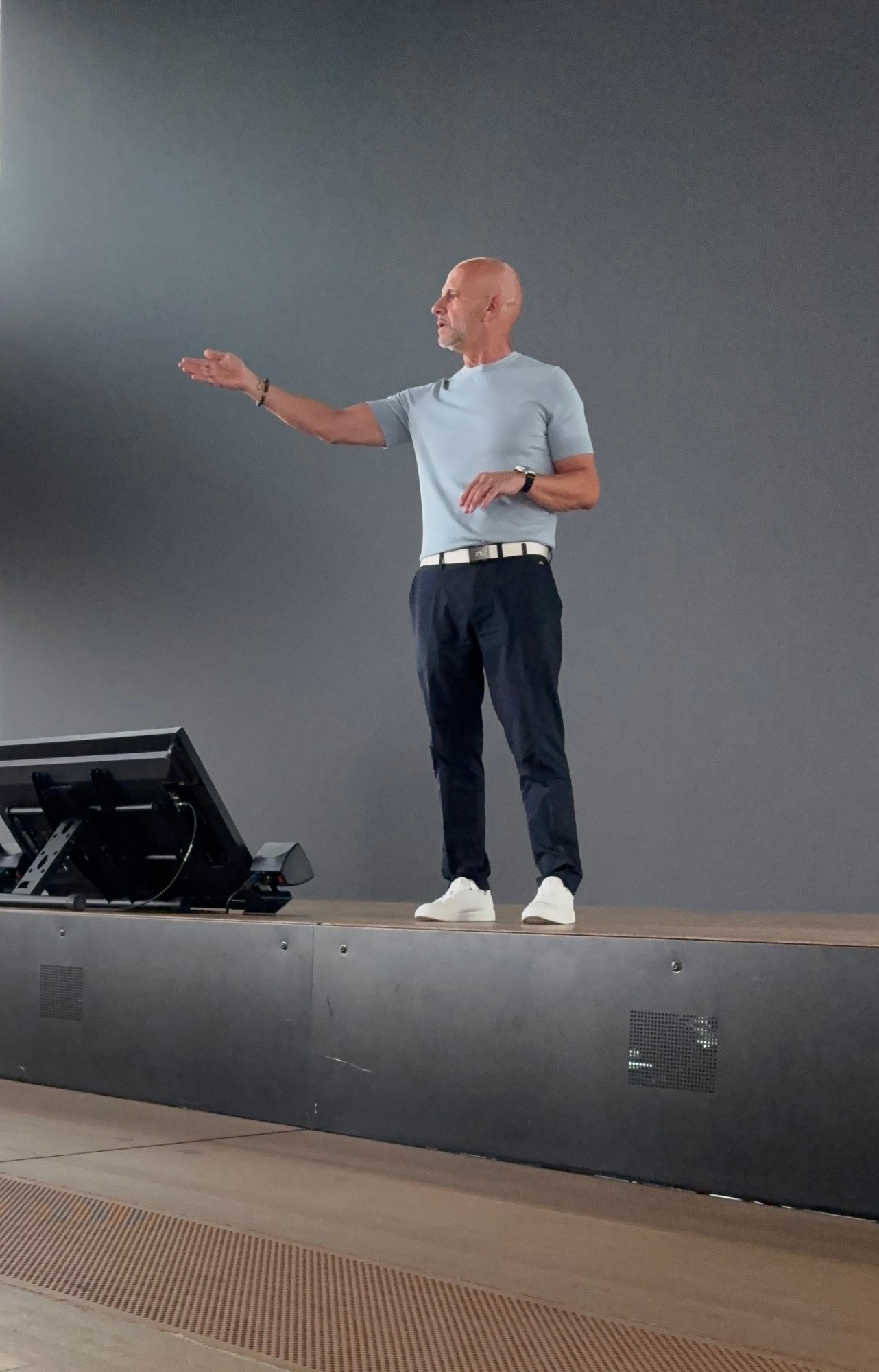
Who runs this
Thorsten Enderlin
Certified Practitioner of the Leadership Circle Profile and ICF PCC certified coach. My corporate years ran across sites and countries, working with teams at every level - from first-time leads to executive committees.
This is the programme I ran internally, about a hundred times, before I ever sold it. The examples come from matrix organisations, performance conversations and reorganisations, not from textbooks.
November 2026 cohort
Limited seats, one round
1.190 EUR
Continue one-to-one in Clarity & Execution within four weeks of the final module, and the full programme price is credited.
- Dates
- 5 Nov · 19 Nov · 3 Dec 2026
- Time
- 17:30–20:30 CET
- Who
- A small group from across the world, live on Zoom
Registration asks four questions, including the one about the conversation going in circles. I read every registration before I confirm your place. If your answers show it is not the right fit, you hear from me within 48 hours and get a full refund.
Questions